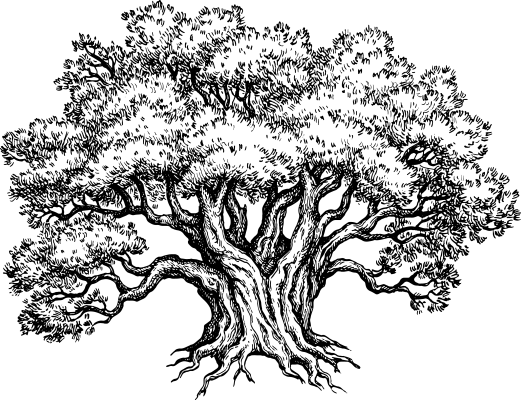
The Fortingall Yew is thought to be about 5,000 years old.
Before the arrival of Christianity, the yew (Taxus Baccata) was known as the ‘tree of eternity’, and it’s easy to see why. At about 500 years old, long after most other trees have died, the yew starts to grow again. This ‘otherworldly’ power meant early peoples revered the yew, and built their places of worship near fine specimens.
Fortingall village was an important settlement in the Bronze age and Iron ages (at which time it may have been a cult centre), then for Picts and Scots, before the Romans turned up and built a fort on the hill behind it. The yew probably played a part in village life and ceremonies.
When early Christians came to Fortingall in the 7th century, it was an obvious choice to build their new church next to the Fortingall Yew, which was already c.3,700 years old at that time.
 Fortingall Ventures